

How Slots Have Evolved Over the Years – From Physical Machines To Online Slots
November 5, 2026For years, slots have progressed from being limited to Atari machines to being played on your smartphone or laptop. Technology has massively reshaped how we enjoy our favorite slot titles, and this has greatly changed the experience.
This article closely examines gaming machines’ remarkable development and evolution from Atari to modern slots. So without further ado, let’s dive straight into it.
Cryptographic Transparency and Provably Fair Digital Slots
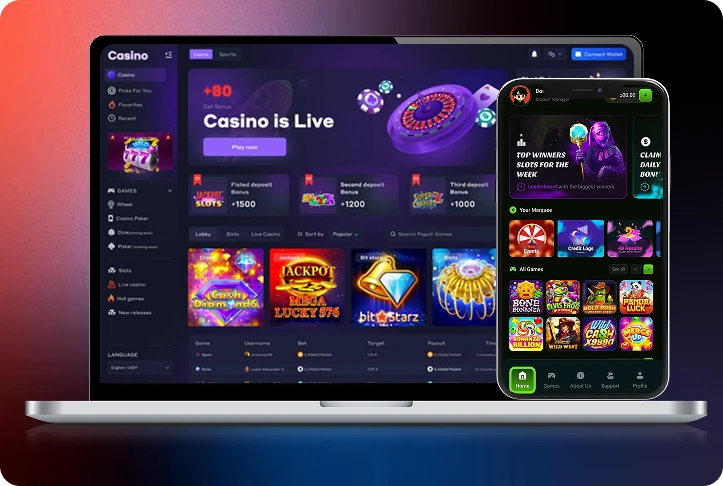
Source: trueigtech.com
When playing online slots in online casinos like Betway, it is imperative that a high level of trust and confidence is maintained. One of the most recent innovations in fortifying this security is cryptographic verification.
Most trusted web platforms have integrated this into their operations by deploying Provably Fair Algorithms leveraging cryptographic hash functions. These algorithms enable you to verify that every spin’s outcome was purely random and free from operator manipulation. This technology eliminates any possible doubts, allowing punters to feel safe when enjoying your online slots game.
Video Slots and Multi-Payline Paytables
In the late 70s and 80s, the gambling world witnessed the birth of video slots that slowly replaced physical rotating reels with electronic color cathode-ray tube (CRT) display screens. Companies like Fortune Coin Co. paved the way for video slots with their designers solving the constraints that were brought by physical spinning reels.
Gambling platforms adopted multi-payline structures, allowing 5, 15, or even 25 paylines across 5×3 screen grids as opposed to single horizontal lines. While it may seem like a relatively small change, this feature massively boosted the experience.
Progressive Jackpots and Shared Prize Pools
Perhaps one of the best features online slots have graced us with is having progressive jackpots. Integrating this feature that allows you to win a significantly larger amount based on your wager has been revolutionary.
Progressive jackpots basically collect a percentage of all total bets placed across different rounds into a shared prize pool. Depending on the game, these shared prize funds could grow into the millions, and one lucky punter gets to walk away with it. After winning, the pool is reset and begins accumulating funds for the next lucky winner.
The Mechanical Era

In contrast to the fully digital online slots, which can be accessed from anywhere with a smartphone nowadays, the initial titles of this type were developed in the late 19th century. They relied solely on mechanical components for their operation.
The first invention we would know as a slot machine was created by a business in New York City with very little functionality. Basically, when an individual pulls the lever, the machine’s five drums revolve and display a random poker hand. The business owner housing the gaming equipment would have to give the winner the prize if they had a winning hand.
Thanks to this, there was a need for a new machine that could automate payouts, which prompted innovator Charles Fey to enter the market with his autonomous slot machine, although one with just three reels instead of the standard five. As mechanized slot machines became more popular, so did bigger jackpots. In the beginning, the largest payment was only 50 cents.
The Microprocessor Revolution and Pseudo-Random Number Generators (PRNG)
In the mid-1970s, the slot industry shifted from physical gears to digital microprocessors. This move laid the groundwork for modern casino gaming since it paved the way for the introduction of pseudo-random number generators (PRNG).
This invention eliminated the need for physical stops. So now, instead of outsourcing probability to mechanical reels, we now rely on computerized algorithms that produce thousands of numbers per second dictating spin outcomes immediately. Thanks to this, game developers can now offer higher jackpot payouts, making the game more fun.
The Transition to HTML5 and Mobile-First Architecture
In the early 2010s, slot development underwent a critical technical shift away from legacy Adobe Flash plugin software toward responsive HTML5 programming. This change in code build allowed slots to run on any mobile browser without having to download extensive packages or any third-party plugins.
Thanks to smartphones, mouse clicks were replaced with touch screens, making the game feel much smoother. Additionally, by compressing various mobile assets, you now enjoy instant load times when playing over cellular data, giving punters access to seamless high-definition gambling experiences.
Multi-Feature Mechanics

Modern slots are not simply about tapping the screen and winning upon aligning the symbols on the payline. There is so much more that goes on to give the game an extra kick. Slot machines previously relied on static paylines that have been greatly modified.
Presently, you will find these titles with dynamic reel-modifier systems that redefine traditional gameplay. Through innovations like Big Time Gaming’s Megaways engine, the game has been modified to dynamically alter the number of symbols appearing on each reel per spin, unlocking up to 117,649 ways to win! With such mechanisms in place, punters have more to get out of the game than simply a few shots.
Electromechanical Innovation
Mechanical slots quickly gained popularity and footing in many countries after they were first introduced in North America. However, development stalled for quite some time, and the initial model to fully utilize electromechanical technology wasn’t released till the 1960s.
This not only contributed to the skyrocketing popularity of slots but also had the practical impact of making the side-mounted knobs that were employed to rotate the reels obsolete. The digitalization of slot machines made it attainable to add an abundance of free games and additional functions that were previously hard to implement. It also led to the ultimate replacement of early analog components with digital displays in the early years of the 21st century.
Furthermore, midway through the 1970s, technological advancements allowed the development of video slots, which used integrated color monitors to replace traditional spinning reels.
Conclusion

Online slots currently rank as one of the most played titles in modern-day casinos, and with good reason. These titles have evolved from their predecessors the Atari machines, and now, thanks to technology, punters can play from their phones to their laptops.